
Why a 1 Inch Impact Wrench Changes How You Work
There is a moment on every job where you realize the tool in your hand is not up to the task. You are wrestling a rusted bolt on a truck frame or trying to break a seized lug nut on a piece of farm equipment and your 3/8 inch wrench just spins and spins and does absolutely nothing. That is when you need a 1 inch drive. Not a 1/2 inch. Not a 3/4 inch. A full 1 inch drive that can put real torque behind the socket and actually move the fastener instead of just chewing up the threads.
The M18 Impact Wrench is the tool I would grab first if I had to pick one impact wrench to handle the heaviest work in my shop. It is a Milwaukee M18 FUEL and it is not the lightweight version. This is the big one. The one that hits 1800 foot pounds of nut tightening torque and 1500 foot pounds of fastening torque. If you are working on automotive repairs or equipment maintenance or anything that has a stubborn fastener on it this is the wrench that gets the job done without you having to soak it in penetrating oil for three hours and then still not get it to move.
And here is the thing that makes me love it. It is cordless. No hose. No air compressor. No dragging a 50 foot air line across the shop floor while you try to reach the back of a chassis. You just grab the tool and go. The 10.5 pound weight is not featherlight but for what it does it is remarkably manageable. You can hold it overhead for a while without your shoulder starting to scream at you. That balance and that ergonomics is what lets you work longer with less strain and that is not a small deal when you are on a job all day.

Milwaukee M18 FUEL 1 In Cordless Brushless Impact Wrench – Tool Only (2867-20)
$899.00MilwaukeeView ProductThe M18 FUEL Specs That Actually Matter
Let me break down what makes this wrench tick because there is a lot going on under that rugged chassis and most of it is there for a reason. The brushless motor is the big one. Brushless motors run cooler and last longer than brushed ones and on a tool that is going to be hammering out 2400 impacts per minute that matters a lot. You are not going to be burning through the motor after a season of heavy use. The high efficiency design means you get sustained power output without the motor cooking itself after twenty minutes of continuous work.
The variable speed control is something people overlook until they actually need it. You are not always working on the same size fastener. Sometimes you are backing out a 1 inch nut on a structural beam and sometimes you are just snugging down a smaller bolt on a bracket. Being able to dial in the speed means you do not strip the fastener or over tighten it. You get precision where you need it and raw power where you need that too. It is a small feature on the spec sheet but in real use it saves you from a lot of headaches.
The integrated LED work light is small but it saves you from fumbling around in a dark engine bay trying to find the socket you dropped. The friction ring for socket retention means your socket does not fly off when you hit a hard stop and end up looking for it under the vehicle for ten minutes. And the One Key compatibility means if you run a shop with multiple tools you can lock them and track them. For a shop with several techs and a lot of equipment that is not a trivial feature at all. It keeps things organized and it keeps your tools from walking off the job site.
It is UL Listed which means it has passed the safety and durability testing that actually matters. You are not getting a tool that is going to fail in the middle of a job because the housing cracked or the electronics shorted out. Milwaukee builds these things to be thrown in a truck bed and used in rain and mud and then thrown in again the next day. The chassis is built to take that abuse and keep working. THAT is what you want from a tool that costs close to 900 dollars. You want it to be there every single time you need it.
When You Need to Break Concrete: The Bosch Demolition Hammer
Now here is where it gets interesting. You have your impact wrench for the fasteners but what about when you need to actually break something? When the floor is concrete and you need to pull it up. When a wall is masonry and it needs to go. That is a different animal entirely and that is where the Bosch Demolition Hammer comes in. This is not a small hammer for chipping paint. This is a 14 amp SDS Max demolition hammer built to put serious force into concrete and masonry and keep doing it for hours without losing power.
It puts out 12.4 foot pounds of impact energy at 1890 blows per minute. That is a lot of force and it is the kind of force that makes a concrete floor break in minutes instead of hours. The 22.5 inch form factor keeps it manageable in your hands and the 360 degree auxiliary handle means you can grip it from any angle that works for your body. The cushioned rear grip helps when you are running it for an hour or more and your palms are starting to get tired. The design minimizes reverberation and vibrations which helps you stay comfortable through extended use and that is a big deal when you are doing a full day of demolition work.
The variable speed control on this thing is genuinely useful and not just a marketing feature. You are not always breaking through the same material. A thin slab of concrete is not the same as a thick foundation wall. Being able to dial back the impact force means you get cleaner breaks and less dust and less vibration traveling up your arms. The rugged metal housing and the reliable cooling system are built to keep this thing running steady through long demolition runs without overheating or losing power. It is CSA and UL certified so you know it is built to a standard that will hold up on a job site.
It comes with a carrying case which sounds like a small thing until you are hauling it to a job site and you do not want it bouncing around in the back of your truck getting dinged up. The SDS Max connection means you can swap bits quickly and use a wide range of Bosch steel accessories for different demolition tasks. Whether you are breaking concrete or cutting through masonry you have the right bit for the job and you can change it in seconds without fumbling around with a wrench.
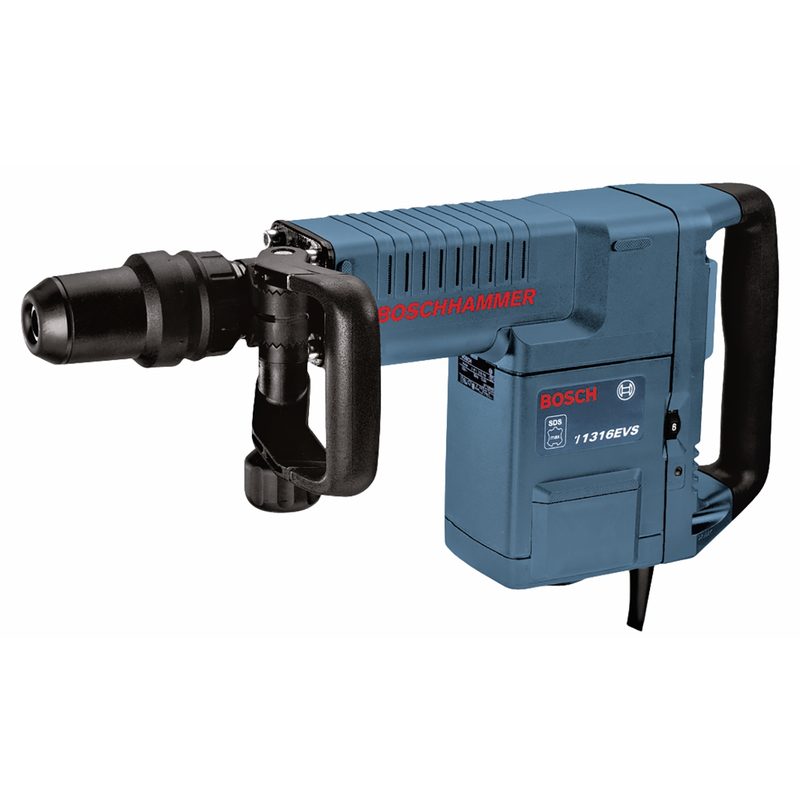
Bosch 14 Amp SDS-Max Demolition Hammer with Carrying Case & Auxiliary Handle — 12.4 ft-lb, 1890 BPM
$829.99BoschView ProductMeasuring Before You Break: The Revolve2000 Laser Meter
Before you swing that demolition hammer or start breaking bolts you need to know exactly where you are working. And I do not mean eyeballing it. I mean measuring. The Revolve2000 Laser Meter is the tool that makes layout and alignment fast and accurate enough that you do not have to go back and redo work because you were a quarter inch off. It is the kind of tool that saves you from the most expensive mistake in construction which is measuring wrong and then building the whole thing in the wrong spot.
This thing reaches 2000 feet. Two thousand. That is not a typo and it is not a number that applies to your garage. For indoor work you are probably using a fraction of that range but for outdoor installations or large scale surveying work it is a massive advantage. You can measure across a large warehouse floor or down a long stretch of pipe without having to walk back and forth with a tape measure and hope nobody steps on the end. The 7 inch by 6.7 inch size means it fits in a tool bag without taking up the whole thing and the protective red metal frame keeps the optics and electronics safe from the daily abuse of a job site.
The accuracy is plus or minus 1/16 inch at 100 feet. For leveling and layout tasks that is tight enough to trust and it means you are not going to end up with a shelf that is slightly crooked or a wall that is a few millimeters off plumb. The self leveling electronics keep the beam aligned automatically and the disturbance monitor means if the unit shifts or gets bumped the reading is flagged so you know to take it again. You are not going to walk away from a measurement thinking it is good when the tool actually moved on the tripod. That alone saves a lot of rework.
It comes as a complete kit with a sturdy carrying case and it works with popular LR receivers and standard tripods. That compatibility is important because it means you are not locked into one brand of receiver or one type of tripod. You can use what you already have and expand as needed. For a crew that is doing layout work all day this saves hours of measuring and re measuring and arguing about whether the line is straight or not.
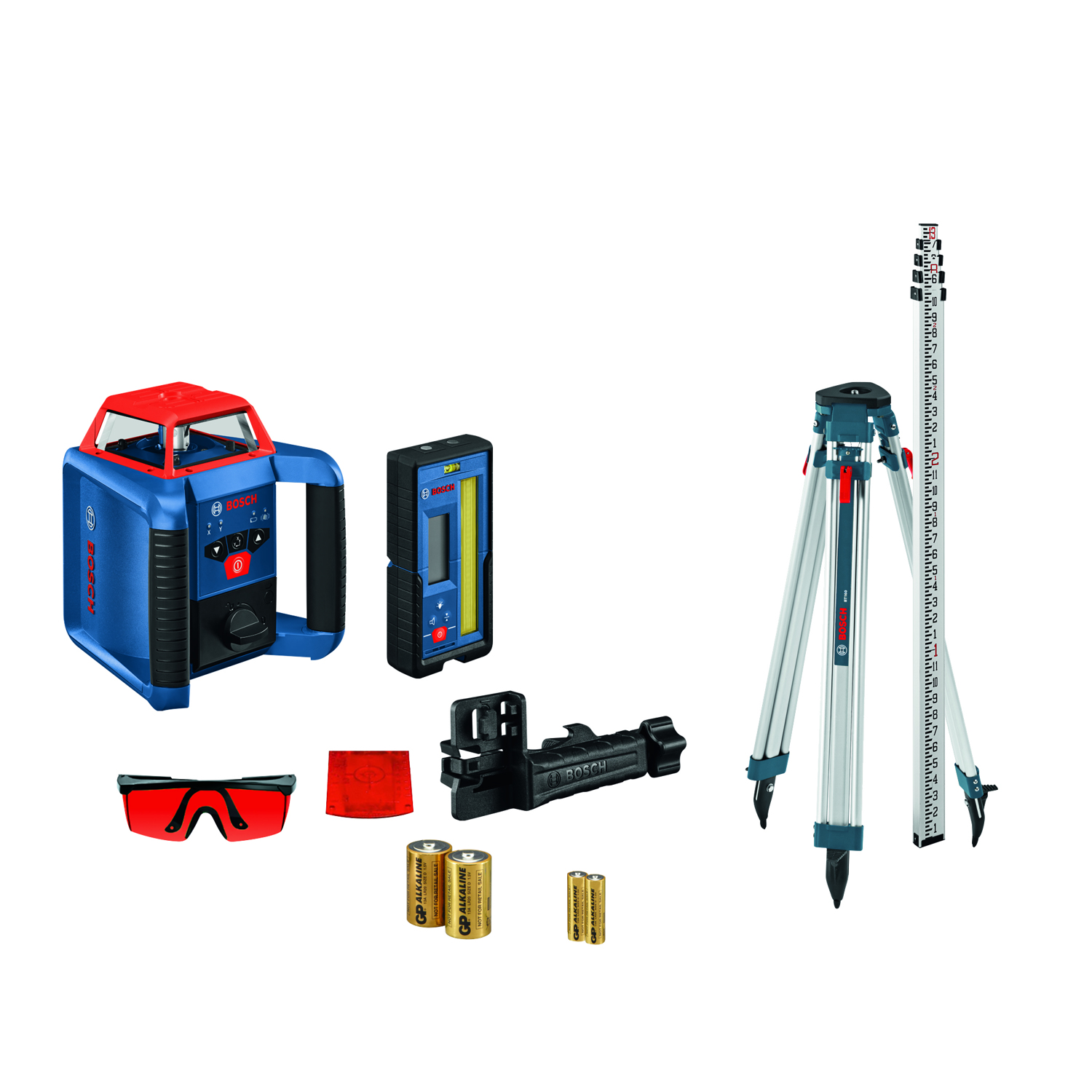
Bosch Revolve2000 Laser Distance Meter — 7 in L x 6.7 in W, 2000 ft Range, Complete Kit
$999.00BoschView ProductBuilding a Tool Set That Actually Works Together
Here is what I think about when I look at these three tools together. They are not random picks. They cover the three phases of a serious project. You measure. You break. You fasten. Or in reverse order you fasten. You break. You measure the new space. The M18 Impact Wrench handles the fastening and the removal. The Bosch Demolition Hammer handles the breaking. The Revolve2000 handles the measuring. Each one solves a specific problem and together they cover the full range of work you will encounter on a job site.
If you are a professional crew or a serious DIYer who takes on projects that go beyond hanging a picture frame these three tools form the backbone of a working shop. You do not need a 2000 foot laser meter for every task but when you do need it you are glad it is there and you are not trying to stretch a 30 foot tape across a building. You do not need a 14 amp demolition hammer for a small bathroom remodel but when you are tearing out a concrete floor it is the difference between a two hour job and a six hour job that leaves you exhausted and sore.
I have seen people try to do heavy demolition work with a smaller hammer and end up with sore wrists and a job that took twice as long. I have seen people use a 1/2 inch impact wrench on a 1 inch bolt and strip the fastener so badly they have to cut it off and start over. These tools exist to prevent that frustration. They are built for the work that smaller tools just cannot handle and they are built to handle it consistently day after day without falling apart.
Where to Find Them and Get the Right Fit
If you are in the White Hall Arkansas area you can stop by Town and Country Hardware and actually hold these tools before you buy them. There is a real reason I recommend going in person for something in this price range. You want to feel the weight. You want to check the balance. You want to see how the grip feels in your hand. A 10.5 pound impact wrench feels different in person than it does in a product photo and a demolition hammer that looks manageable in a box can feel like a different animal once you are holding it with both hands and trying to aim it at a concrete slab.
The M18 Impact Wrench is listed as tool only so you will need to have a compatible M18 battery and charger. If you already run Milwaukee M18 tools in your shop this is a drop in addition and you can share batteries across your whole set. If you are starting from scratch budget for the battery pack separately because the tool alone is not going to do you much good without power. The demolition hammer runs on 14 amps of line power so you need a proper outlet or a generator on site. The laser meter runs on batteries and the included case keeps everything organized and protected.
My honest advice is this. Do not buy all three at once if you do not need all three. Start with the tool that solves your biggest current problem. If your biggest problem is stubborn fasteners get the impact wrench first. If you are in the middle of a demolition project get the hammer. If you are doing a lot of layout work and keep making mistakes with a tape measure get the laser meter. They all earn their place but they earn it for different reasons and the right order depends on what is in front of you right now.
Whatever you choose the right tool for the job is always better than the wrong tool used harder. These three are built by companies that have been making professional grade tools for decades and they show it in the construction. You are not buying a gadget. You are buying a piece of equipment that is going to be in your hand every day for years. Treat it right and it will treat you right and that is the whole point of spending real money on real tools.
